By choosing renewable energy, you and your customers protect the environment and secure the benefits of energy independence while reducing long-term energy costs. The WSU Energy Program has leadership roles in each of the renewable areas described below.
Current Projects
Green Transportation Program
Green transportation describes many types of mobility that conserve energy, increase efficiency, and use clean and renewable alternative fuels. The transition from fossil fuels—gasoline and diesel—is well underway. Washington consumers and fleets increasingly use alternative fuels, such as clean electricity, biofuels, and renewable fuels, to move people and goods.
This is especially true for public fleets. The Washington legislature set ambitious goals and provides grants and incentives to support green transportation at all levels of government. The WSU Energy Program maintains the Green Transportation website to provide education and technical assistance to support public fleets’ transition to cleaner fuels.
Alternative Fuels and Vehicles
We provide technical assistance and support about alternative fuels and vehicles to a wide variety of local and state agencies. Our staff members have been long-time members of the steering committee of the Western Washington Clean Cities Coalition, a U.S. DOE program that is part of the Puget Sound Clean Air Agency.
For the NW Clean Air Agency, we investigated ways to expand alternative fuel and vehicle use in NW Washington to reduce greenhouse gas emissions.
For the Washington Department of Commerce (Commerce), we provided technical support to develop and adopt administrative rules about legislated mandates for alternative fuel use affecting state agencies and local governments, including transit agencies, ports, utilities, and school districts.
WSU staff helped create and continue to serve on the state’s Alt Fuel and Vehicle Technical Assistance Group (AFV-TAG).
We provided early technical support to the Washington Department of Transportation (WSDOT) on steps to create an EV infrastructure bank to expand the West Coast Electric Highway.
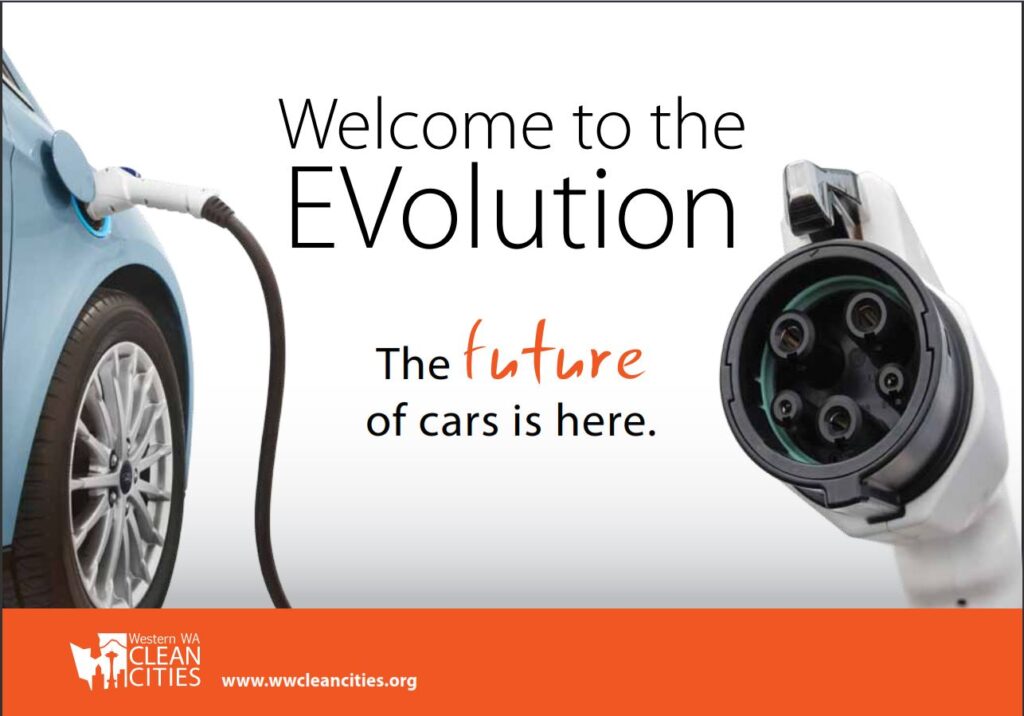
We developed the EV guidebook, entitled “Welcome to the EVolution” (PDF), for Western Washington Clean Cities.
From 2011-2012, our alt fuels specialist served on Governor Chris Gregoire’s Clean Car Committee for state government, staffed the combined Commerce-WSDOT EV Taskforce under Governor Gregoire, and drafted the Task Force final report. We also provided technical and administrative support about electric vehicle deployment to Commerce, creating the structure and content for the original electricdrive.wa.gov website.
Biomethane – Renewable Natural Gas
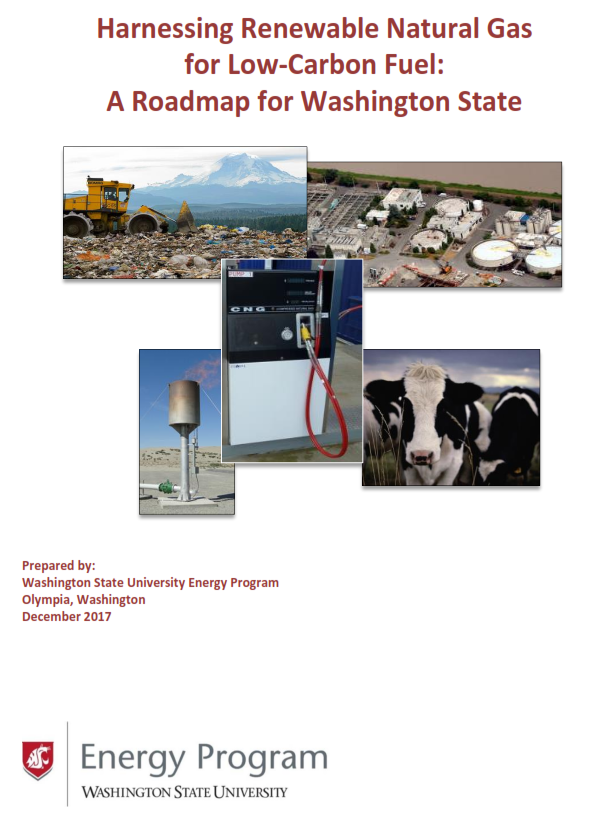
Our team researched opportunities for using biomethane as a transportation fuel and prepared the two-part webinar, “Costs and Benefits for Transportation” and “Transportation Experience and Opportunities in Washington State,” for the Western Washington Clean Cities Coalition. We also completed business outreach on renewable natural gas (RNG) for the coalition, which prompted Pierce Transit to use RNG for some of their buses.
Our team supported a feasibility study to create a large-scale biomethane production project on dairy farms in the Yakima Valley. We are also evaluated the feasibility of an anaerobic digester along Thurston County’s Bountiful Byway to produce RNG and other marketable products from agricultural waste.
Biodiesel and Renewable Diesel
For more than a decade, the WSU Energy Program has been a major partner with other state agencies in developing a strong biodiesel production and distribution system in Washington. We cooperate with scientists in the crop and soils science areas as they improve the viability of oil seed crops as a marketable commodity in the state. We also work with the state departments of Agriculture and Commerce on the distribution and use of biodiesel by state agencies and private fleets.
Renewable diesel is a variant of clean diesel. WSU staff contributed to an early white paper on the opportunity for renewable diesel production and use in Washington.
Other Alternative Fuels
Washington is rich with opportunities to develop and use other alternative fuels, such as propane, hydrogen, and ammonia. The WSU Energy Program is committed to staying up to date on all these developments. As host of the Washington State Energy Library, we have the most extensive collection of technical resources and data about these innovative fuels and the engines and vehicles that use them.
Bioenergy
Our bioenergy team evaluated densified biomass (wood pellets) as a renewable fuel. We also lead the six-state Pacific Region Bioenergy Partnership that encourages the development and use of bioenergy technologies that are technically feasible and cost effective.
Publications and Resources
View our archived renewable energy publications.