Washington’s school districts have the opportunity to add electric school buses (ESBs) to their fleets. The Green Transportation Program (GTP) offers resources and guidance to help districts decide if this is the right time to pursue available funding.
Why electrify?
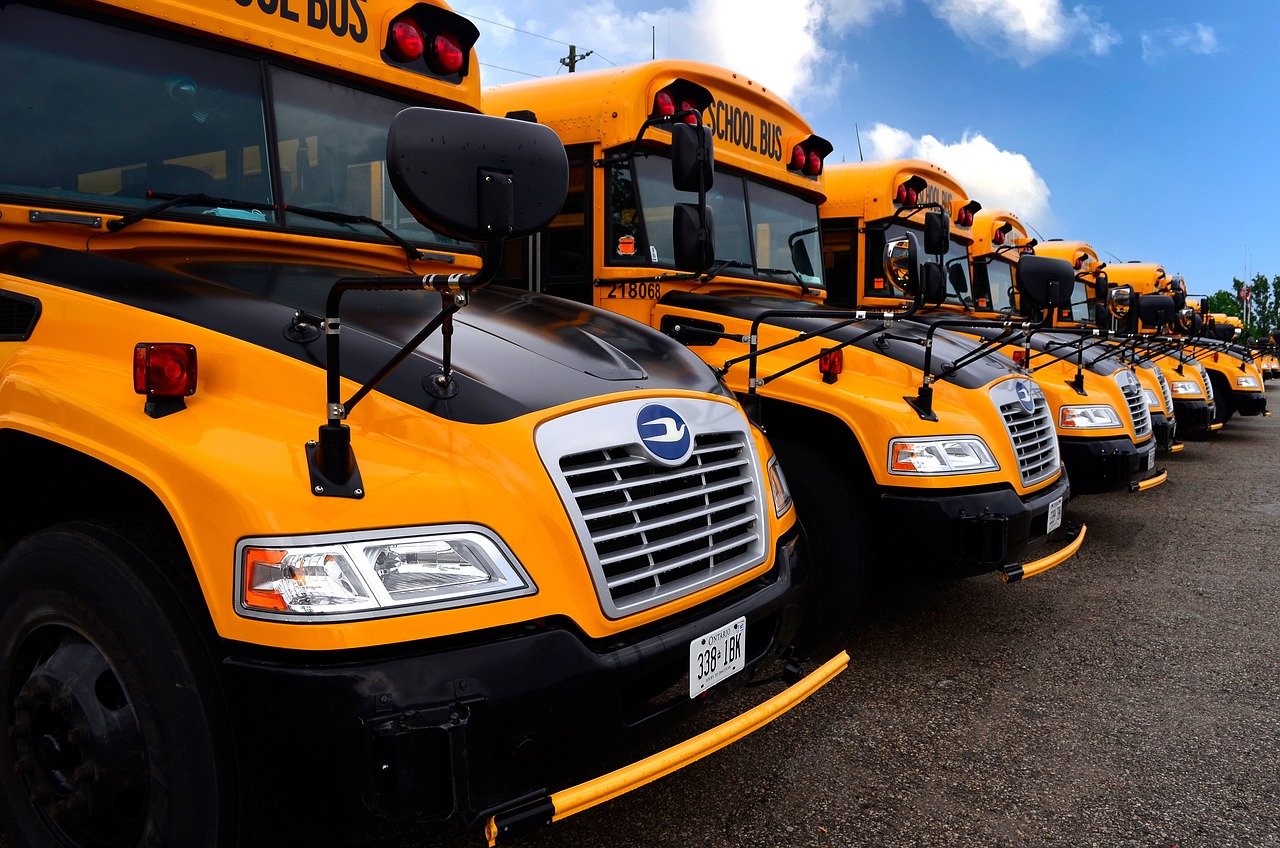
Health and environmental benefits of replacing diesel-fueled school buses with ESBs are clear. Diesel exhaust, a known carcinogen, is linked to serious physical health issues and cognitive development impacts. Students in some neighborhoods are disproportionately exposed to the dangers of diesel exhaust pollution. Electrifying school bus fleets can help address these health and environmental concern.
Questions? The GTP can help!
We invite school districts to contact us for free technical assistance about your projects and challenges. We can help you:
- Identify which bus routes to electrify.
- Find available ESB models.
- Identify the best locations for installing EV charging stations.
- Work with your electric utility to assess electrical capacity and install charging infrastructure.
- Find grant opportunities and utility incentives that could support your school district.
What do you want to learn about?
The Business Case for Electric School Buses
The World Resources Institute’s Electric School Bus Total Cost of Ownership Calculator can help you understand the financial benefits of replacing fossil-fueled buses with electric school buses.
New rules will help school districts and other qualifying entities claim tax credits when they invest in commercial clean vehicles (including electric school buses) and charging equipment. Those who qualify can get tax credits as direct payments from the IRS. These benefits are specifically for entities that don’t pay taxes or receive tax credits, such as schools; state, local, and Tribal governments; nonprofit organizations; U.S. territories; hospitals; and places of worship.
Lawyers for Good Government provides resources and expert advice if you have questions related to federal changes that could impact climate funding and tax credits.
Projects that meet additional criteria may be eligible for additional tax credits. See Bonus incentive credits on the IRS website for details. These include:
Entities that use tax-exempt grants and forgivable loans to fund clean energy projects can still receive the full value of tax credits. The World Resources Institute addresses this in 5 Tips for Leveraging Direct Pay Provision to Maximize Clean Energy Investment Benefits.
The Washington Department of Commerce launched a first-in-the-nation program to provide support to help demystify this process. The goal of the Federal Clean Energy Tax Assistance Program (CETCAP) is to help entities across Washington leverage federal clean energy tax credits made available by the Inflation Reduction Act. CETCAP has contracted with Lawyers for Good Government to provide free one-on-one legal assistance to claim these tax incentives.
- Alliance for Electric School Buses helps resources advocate for ESBs. The alliance’s website houses federal and state resources, as well as a directory of resources for school districts.
- Student transportation website from the Office of the Superintendent of Public Instruction includes resources for school district transportation managers, including details about the bidding process for school buses.
- Electric School Bus Initiative from the World Resources Institute presents resources and tools that support ESB adoption, organized under the themes Tools, Engage, Evidence, and Resource Library.
- Electric School Bus Market Study and Electric School Bus U.S. Buyer’s Guide provides links to ESB type definitions and miles per charge by ESB type.
- Electrification Coalition supports widespread adoption of EVs by providing policy, advocacy, consumer education, and electrification planning.
- Electric School Bus Coalition advocates for increased funding and policies that support the transition to ESBs.
- Electric School Bus Network works to accelerate school bus fleet electrification nationwide by offering peer-to-peer networking and forum meetings so people can enhance their understanding of market trends, funding opportunities, and real-world experiences of fleets as they electrify.
- Electric School Bus Newsletter offers insights and case studies supporting the electrification of buses with a focus on equity. Electric School Bus Technical Workshop (Oct. 2023) covers ESB and charging technologies, lessons from school districts among the first in Washington to deploy ESBs, and cold weather and range concerns.